**Edited to add: It didn't take long (literally, just moments) after I sent the email for me to regret wasting the time of those I copied on the message for the sole purpose of saying "See, annoying, innit?" Please forgive my dumbassery on that point.**
I'm sure by now many of you have heard about the tasteless email Amazon sent out to KDP authors late Friday/early Saturday. I answered their call and emailed Hachette about the ongoing dispute, and I made sure to copy "Readers United" and a small handful of other people, too. Here's what I said:
Dear Mr. Pietsch:
I'm writing to you (and some others) today as a direct result of receiving Amazon's email propaganda in the early hours of the morning. I am appalled and annoyed at being dragged into an argument against my will, especially when the party doing the dragging is quite aware, and even acknowledges, that I'd rather be left out of it. But Amazon asked me to email you with my thoughts--actually, they wanted me to email you with their thoughts, and I decided I liked mine better--and so here we are. Let me make a few things clear before getting to my main points:
1. I am not published by Hachette or by any publisher.
2. I am self-published and my work is available on Amazon, among other places. Amazon is not my publisher. They are one of my retail partners, though "partner" probably isn't really the best word for it.
3. Hachette is a business. Amazon is a business. I am my own business. The first priority of any business is making money, or else they will no longer be in business.
That Amazon would ask me to plead their case to a publisher with which I have no relationship is laughable. As Heidi Cullinan puts it, there are Not Enough Memes in the World For My NO. That they would do it with such poorly written propaganda--and propaganda is truly the only word for it, as Matt Wallace explains--is laughable. Further, that they would do it under the guise of doing what's best for "reading culture" is downright ludicrous. Because I have no stakes in the specific dispute between Hachette and Amazon, I have not read every last word reported on the issue. I have read a handful of posts about it from people I respect on both sides of the debate and mostly ignored it outside of that. One thing I am absolutely sure of, however, is that this is about money. Period. And that's okay, because as as I said, this is business. But for Amazon to go on about helping "book culture" as though readers are incapable of changing the market by making their decisions about how much to spend (or not spend) is disingenuous at best.
Mr. Pietsch, I may not agree 100% with your side of this dispute (I truly don't know to what extent I agree with any side) but I feel a bit of solidarity with you based on one glaring similarity we share: Amazon thinks you and I (and every KDP author to whom they sent their email) are idiots with our heads up our own asses, apparently. They must think so, if they believe an email full of buzzwords, emotionally-charged imagery, and one-sided spin is enough to get me to fight their fight. To do that, I'd need to ignore a whole lot of common sense.
This is where I'm supposed to implore you to "Stop using your authors as leverage and accept one of Amazon’s offers to take them out of the middle" while ignoring the fact that by doing so Amazon obviously thinks it's okay to use me as leverage and put me in the middle of this so long as they come out on top.
Or perhaps I should remind you that "With an e-book, there’s no printing, no over-printing, no need to forecast, no returns, no lost sales due to out of stock," etc. while ignoring the fact that, although they're obviously referring to large print returns, they make it quite easy to return e-books, potentially to the detriment of the author when that feature is abused. If I'm going to remind you of this, then I should also ignore the fact that as a self-published author with Amazon I am already pigeon-holed into their pricing requirements with no means of negotiation and subject to their whim should they decide to pull my books for any reason they see fit.
Am I convincing you of Amazon's position yet? No? Here, let me keep trying.
It's important to note that Amazon thinks "books compete against mobile games, television, movies, Facebook, blogs, free news sites and more. If we want a healthy reading culture, we have to work hard to be sure books actually are competitive against these other media types, and a big part of that is working hard to make books less expensive." I'll ignore the fact that people regularly pay more money for a mobile game than some e-books cost, and then they pay money again and again to buy more features within the game. Let's also ignore how actors are paid more per movie than I can hope to make in many, many years, and that movie tickets are expensive but people still choose to buy them. While we're at it, we should ignore all of the books being made into movies, because they obviously they were only made into movies because the books were too expensive and nobody bought them. And nobody in the history of the world has ever seen a movie adaptation first and then bought the book after, am I right? Movies and TV shows are never adapted into video games, free news sites obviously never post books reviews, and no author in the history of the Internet has promoted their books on Facebook because all of these things are supposed to be in competition with each other! The logical solution is to make all books as cheap as Amazon wants! Um, right?
I should wrap this up soon because I am obviously terrible at doing what Amazon tells me to do in their ridiculous emails. One last thing, though. The thing Amazon is ignoring, and hopes I'm ignoring, too, is choice.
I have friends published by Hachette and its imprints that have been caught in the middle of this nasty fight. I have friends published by other big publishers who have been treated poorly, and others who've been treated like rock stars. I have self-published friends who have been hurt by Amazon's policies and past actions, and others who have made six or seven figures since self-publishing, largely with Amazon. There are so many choices about how and when and where and why to publish these days, and there is no one golden path. Authors have a choice, and as Amazon is so quick to point out, we are not all united. Why they took that to mean we would all fight their fight still escapes me, but that's neither here nor there at this point.
Hachette has choices. Amazon has choices. Is there an amenable compromise to be had here? I be there is, but I also bet one or both parties are unwilling to compromise on a lot of things. Which means there's also the choice to sever the business relationship, as unpleasant as that may be.
As a self-publisher, I have the choice to sell my book where and for the price I want. I choose, currently, to include Amazon in my sales plan. Despite the fact that they give preferential treatment to pretty much everyone else--in the name of "book culture," I'm sure. Despite the fact that in addition to taking a slice of my profits they want me to grant them exclusivity before I can take advantage of their Kindle Unlimited program. That is, unless they handpick me from the unwashed masses or I'm published by a big publisher whose books are priced higher than mine. So much for that "cheaper is better" thing, right? Despite their many shortcomings, I sell my books there. It's a business choice.
Readers have a choice of where to purchase e-books. They have the choice to either pay what is asked, or not. If they choose not, that's a clear signal to a publisher or a retailer that they need to do something differently or risk going out of business. Consumers have a long history of speaking with their wallets without Amazon or anyone else forcing the issue.
Amazon had a choice, and it chose to treat me and others like idiots by sending an email full of out-of-context quotes and cherry-picked statistics in the hopes that we will defend their position in this negotiation, despite the fact that we don't even have the ability to negotiate with Amazon on our own behalf as author-publishers. That was a poor choice on their part. I have to agree with Chuck Wending when he says, in quite possibly the tamest language I've ever seen him use, "I think it's tacky." To say the least. And it has me looking long and hard at my choice to sell on Amazon, which is probably not the reaction they had hoped for.
Mr. Pietsch, I hope Hachette and Amazon can come to a decision that is beneficial for both businesses and for the authors involved. What that decision is, though, is up to you and Amazon. I have no part of it. I hope that I haven't wasted too much of your time today. That goes for everyone who was copied on this message, too. You may not have cared, you may have wished to be left out of it, and you may not have wanted to spend your time reading just another writer's opinions of something in which they have no stakes. But Amazon didn't let that stop them from dragging me along for the ride, and if there's anything I gleaned from their email, it's that they obviously know what is best. Have a wonderful day.
Yours,
J. Lea Lopez
Needless to say, the whole thing is making feel a little something like this....
Writing and life are like a bowl of jello - malleable, uncertain, open to interpretation, with endless possibilities.
Showing posts with label ebooks. Show all posts
09 August 2014
08 August 2012
On Lynch Mobs, Social Media, and LendInk
Social media is a funny thing. Nothing moves more quickly than an angry internet lynch mob.
Authors today are understandably worried about piracy and copyright infringement. Especially the ones going it alone, who don't have a big publishing house at their backs.
What do these things have to do with each other? I've seen them work together, for good and bad, the past several weeks. I first became aware of a site claiming to be an ebook library, which was really just a place for people to upload and download (in other words, illegally share) books. The cry of piracy went up. I heard about it on AQC, then Twitter and Facebook. Authors sent takedown notices. Their FB page blew up. PayPal yanked their donate button. Within a very short amount of time, the site had to deal with a lot of trouble brought by irate authors. And rightfully so. Though hiding behind semantics and nasty online personas, the site owner and main defender know exactly what they're doing.
Fast forward a couple weeks. I was about to get on a plane to visit my #goatposse writing friends in Las Vegas and was checking Twitter on my phone. I came across a conversation where someone I didn't know was accusing a writing friend of violating copyright and owning/operating a pirating site. I clicked through the conversation and links to see what was going on, and that's how I first heard of LendInk.com. My Twitter interactions at the time were assuring the rabid tweeter that no, this other person was not affiliated in any way with LendInk. (Turns out the confusion came up because of a Hootsuite toolbar that popped up on the window with my friend's Twitter profile pic. Which is not an excuse for this other person to get all crazy over it. If you don't know how social media apps like that work, you shouldn't be on social media. Or at the very least, you need to refrain from making accusations like that.)
After seeing what happened with the site-that-shall-not-be-named mentioned before this, I wanted to warn other authors about another possible piracy site.
Guess what I DIDN'T do? I didn't immediately start tweeting and posting and re-tweeting and shouting PIRATES! PIRATES! What I did do was look at the LendInk website. I was a little confused about what the site was, at first, and I didn't have much time to look before boarding my plane that day. What I gathered was that LendInk facilitates lending of ebooks (that are already lendable) and that said lending was handled by the appropriate sites (like Amazon or B&N).
There was still some confusion because I was seeing people tweet stuff about not authorizing LendInk to lend their books and people still shouting about piracy. I also noticed a few murmurings about it on Facebook. I didn't think it looked like a pirating site, and I had a plane to catch, so I forgot about it for a few days.
Imagine my shock and surprise when I returned a few days later to find that LendInk had been taken down as a result of this internet lynch mob mentality. My first thought was Oh, maybe I was wrong and they were pirating books. But I really wanted some more info. I didn't have to talk to anyone personally involved, as others had already done that for me. The first thing I read was April L. Hamilton's post on the topic, and then this one on The Digital Reader. They basically confirmed what I thought LendInk was about, plus clarifying a little farther how their process works.
Still, I was skeptical. Because how could SO MANY people fly off the handle like they did and be SO WRONG? Since the site had already been shut down (a result of their hosting company being bombarded with angry, misinformed emails threatening lawsuits, and NOT as proof of guilt) it was difficult to dig for more info. All I had to go on was what I remembered reading four days before.There were also people touting an emailed response received by a friend (or by themselves) from Amazon as proof that LendInk was in the wrong. The letter states Amazon did not authorize LendInk.com or any other website to lend their book, and then suggested "contacting that website to confirm your rights and request removal of your work." When I read that, the only thing I could think was that A) this sounded like a form reply, based on the misleading question about whether the site could legally lend boks, and B) LendInk was never lending books to begin with. No files were ever uploaded to, downloaded from, or stored on the site or its servers.
The owner/operator of LendInk has since replied directly to the article on The Digital Reader, and today a friend (the same one who had been accused of being the owner of LendInk by an overzealous author last week) directed me to another article, this time on techdirt, saying exactly the same thing: LendInk was completely legal and legitimate, and it was brought down by a lynch mob of authors who didn't do their due diligence in fact-checking.
So, to recap:
You are responsible for your own actions. You owe it to yourself and to those who could be negatively impacted by your premature mouthing off to do your homework. Read FAQs, take to google, email the appropriate parties (and for goodness' sake, give it TIME! Not everyone is glued to their inbox every second of every day the way we are, waiting for query rejections or news from an agent), talk to each other in a civil manner, and remember that everything you do in a case like this will be subject to public scrutiny.
Think. Then act.
Authors today are understandably worried about piracy and copyright infringement. Especially the ones going it alone, who don't have a big publishing house at their backs.
What do these things have to do with each other? I've seen them work together, for good and bad, the past several weeks. I first became aware of a site claiming to be an ebook library, which was really just a place for people to upload and download (in other words, illegally share) books. The cry of piracy went up. I heard about it on AQC, then Twitter and Facebook. Authors sent takedown notices. Their FB page blew up. PayPal yanked their donate button. Within a very short amount of time, the site had to deal with a lot of trouble brought by irate authors. And rightfully so. Though hiding behind semantics and nasty online personas, the site owner and main defender know exactly what they're doing.
Fast forward a couple weeks. I was about to get on a plane to visit my #goatposse writing friends in Las Vegas and was checking Twitter on my phone. I came across a conversation where someone I didn't know was accusing a writing friend of violating copyright and owning/operating a pirating site. I clicked through the conversation and links to see what was going on, and that's how I first heard of LendInk.com. My Twitter interactions at the time were assuring the rabid tweeter that no, this other person was not affiliated in any way with LendInk. (Turns out the confusion came up because of a Hootsuite toolbar that popped up on the window with my friend's Twitter profile pic. Which is not an excuse for this other person to get all crazy over it. If you don't know how social media apps like that work, you shouldn't be on social media. Or at the very least, you need to refrain from making accusations like that.)
After seeing what happened with the site-that-shall-not-be-named mentioned before this, I wanted to warn other authors about another possible piracy site.
Guess what I DIDN'T do? I didn't immediately start tweeting and posting and re-tweeting and shouting PIRATES! PIRATES! What I did do was look at the LendInk website. I was a little confused about what the site was, at first, and I didn't have much time to look before boarding my plane that day. What I gathered was that LendInk facilitates lending of ebooks (that are already lendable) and that said lending was handled by the appropriate sites (like Amazon or B&N).
There was still some confusion because I was seeing people tweet stuff about not authorizing LendInk to lend their books and people still shouting about piracy. I also noticed a few murmurings about it on Facebook. I didn't think it looked like a pirating site, and I had a plane to catch, so I forgot about it for a few days.
Imagine my shock and surprise when I returned a few days later to find that LendInk had been taken down as a result of this internet lynch mob mentality. My first thought was Oh, maybe I was wrong and they were pirating books. But I really wanted some more info. I didn't have to talk to anyone personally involved, as others had already done that for me. The first thing I read was April L. Hamilton's post on the topic, and then this one on The Digital Reader. They basically confirmed what I thought LendInk was about, plus clarifying a little farther how their process works.
Still, I was skeptical. Because how could SO MANY people fly off the handle like they did and be SO WRONG? Since the site had already been shut down (a result of their hosting company being bombarded with angry, misinformed emails threatening lawsuits, and NOT as proof of guilt) it was difficult to dig for more info. All I had to go on was what I remembered reading four days before.There were also people touting an emailed response received by a friend (or by themselves) from Amazon as proof that LendInk was in the wrong. The letter states Amazon did not authorize LendInk.com or any other website to lend their book, and then suggested "contacting that website to confirm your rights and request removal of your work." When I read that, the only thing I could think was that A) this sounded like a form reply, based on the misleading question about whether the site could legally lend boks, and B) LendInk was never lending books to begin with. No files were ever uploaded to, downloaded from, or stored on the site or its servers.
The owner/operator of LendInk has since replied directly to the article on The Digital Reader, and today a friend (the same one who had been accused of being the owner of LendInk by an overzealous author last week) directed me to another article, this time on techdirt, saying exactly the same thing: LendInk was completely legal and legitimate, and it was brought down by a lynch mob of authors who didn't do their due diligence in fact-checking.
So, to recap:
- LendInk was not doing anything illegal
- LendInk was not offering pirated books for free
- Users could go to LendInk and state they had whatever title available for lending
- LendInk hooked up users who were looking to borrow with users who had books to lend, then referred them back to either B&N or Amazon to do the lending
- Lending ebooks is legitimate and legal
- This fiasco is an example of social media gone wrong
You are responsible for your own actions. You owe it to yourself and to those who could be negatively impacted by your premature mouthing off to do your homework. Read FAQs, take to google, email the appropriate parties (and for goodness' sake, give it TIME! Not everyone is glued to their inbox every second of every day the way we are, waiting for query rejections or news from an agent), talk to each other in a civil manner, and remember that everything you do in a case like this will be subject to public scrutiny.
Think. Then act.
30 March 2012
Short Stories Published!
You may already know, but I had two short stories accepted into an anthology put together by some fellow writers at Agent Query Connect. I'm pleased to tell you that Spring Fevers is now available! Even better, it's free! Download from Smashwords, B&N, or Amazon. Fair warning, though, it's NOT free on Amazon, as they haven't price matched it. Any money from Amazon purchases will be given to charity, so if you want to spend the $0.99, go right ahead. If you read and love it, we hope you'll leave a review! You do NOT need an ereader to read the book, either! If you don't have one, there are free Kindle and Nook apps for your computer and smartphone, as well as Calibre, which will read all ebook formats.
About the anthology
An anthology of short stories, Spring Fevers is an exploration of relationships in their varied states: love -- requited and unrequited -- friendships discovered and lost, family in its many guises, and the myriad places in between. Created by Cat Woods and Matt Sinclair, Spring Fevers arose from their work with the Agent Query Connect online writing community, and while membership in the free site was not necessary for inclusion in the anthology, the ten writers whose stories appear are all members. Authors include MarcyKate Connolly, S.Q. Eries, Robb Grindstaff, J. Lea Lopez, Mindy McGinnis, R.S. Mellette, Yvonne Osborne, Matt Sinclair, A.M. Supinger, and Cat Woods. The debut publication of Elephant’s Bookshelf Press, Spring Fevers was edited by the team of Robb Grindstaff, Matt Sinclair, and Cat Woods, with cover design by Calista Taylor, and book design by R.C. Lewis. A new anthology is scheduled to be released in the fall of 2012.
The beautiful cover was designed by Calista Taylor, who has been a great friend/beta reader/coach and taught me a lot about creating ebook covers, though my skill is amateur to say the least. If you're in the market for a book cover, check out her website Covers by Cali to learn about her incredibly affordable options and to check out the gallery of other covers she has done.
About my stories
I have two stories in this anthology.
The Adventures of Sasquatch is the story of a single mom's desire to assert her fun-loving nature despite the opinions of her coworkers, and maybe even find love in the process. It all starts, and ends, with the most unlikely catalyst: her big feet.
The Haricots Verts is flash fiction, capturing a moment of uncertainty between two potential lovers.
About the anthology
An anthology of short stories, Spring Fevers is an exploration of relationships in their varied states: love -- requited and unrequited -- friendships discovered and lost, family in its many guises, and the myriad places in between. Created by Cat Woods and Matt Sinclair, Spring Fevers arose from their work with the Agent Query Connect online writing community, and while membership in the free site was not necessary for inclusion in the anthology, the ten writers whose stories appear are all members. Authors include MarcyKate Connolly, S.Q. Eries, Robb Grindstaff, J. Lea Lopez, Mindy McGinnis, R.S. Mellette, Yvonne Osborne, Matt Sinclair, A.M. Supinger, and Cat Woods. The debut publication of Elephant’s Bookshelf Press, Spring Fevers was edited by the team of Robb Grindstaff, Matt Sinclair, and Cat Woods, with cover design by Calista Taylor, and book design by R.C. Lewis. A new anthology is scheduled to be released in the fall of 2012.
The beautiful cover was designed by Calista Taylor, who has been a great friend/beta reader/coach and taught me a lot about creating ebook covers, though my skill is amateur to say the least. If you're in the market for a book cover, check out her website Covers by Cali to learn about her incredibly affordable options and to check out the gallery of other covers she has done.
About my stories
I have two stories in this anthology.
The Adventures of Sasquatch is the story of a single mom's desire to assert her fun-loving nature despite the opinions of her coworkers, and maybe even find love in the process. It all starts, and ends, with the most unlikely catalyst: her big feet.
The Haricots Verts is flash fiction, capturing a moment of uncertainty between two potential lovers.
29 February 2012
Can I Use the ISBN Provided by Smashwords to Publish Elsewhere?
Recently I've gotten some comments (on my post from last March comparing Amazon's KDP and Smashwords) and emails asking this question.
Short answer? No.
There, question answered, thanks for reading!
Okay, okay. I know some of you are kicking your feet and whining But why not? It'll save me money to use the ISBN provided for free (or as part of the $9.95 Premium option) from Smashwords when I upload to [insert other ebook retailer here].
My gut-reaction reason for not using the ISBN given to you by Smashwords when you epublish elsewhere is that it's simply unethical. Smashwords is not your cheap ISBN vendor. They offer their free or low-cost ISBN service to people who use their distribution services. It's a perk. Something to entice you to do business with them, you see. If you take that ISBN and attach it to your Kindle book or any other ebook format that you then distribute yourself (or through some venue other than Smashwords), you're taking advantage of the service they've provided. In the long run, this could hurt indie authors everywhere. If everyone snagged a free or cheap ISBN from Smashwords and then used it elsewhere, you can bet your laptop Smashwords would eventually stop offering the service. You might be saving yourself some money in the short term, but you'll be doing yourself (and the rest of us) a huge disservice in the long run.
*steps off soapbox*
Now let's look at some of the logistical reasons you don't want to do this.
First, you don't need an ISBN to publish and have your ebook sold through any of the major outlets except Sony and Apple. You can sell direct through Amazon and have Smashwords distribute to various other outlets without an ISBN. So why even bother putting an ISBN on your Kindle version when you upload to KDP? Amazon will assign you their own identification number. The point of an ISBN is to identify a title (or an edition of a title). Retailers then use the ISBN to track sales of that title or edition. Since Amazon and other retailers will assign their own identification numbers to your book for sales tracking purposes. I'd be curious why indie authors feel the need to bother with an ISBN for the ebook at all, outside of the retailers that require it.
You're required to have a different ISBN for each edition of a book. If you do a print edition, you'll need a different ISBN than your ebook edition. It's currently hotly debated whether each of the ebook formats constitutes a different edition, thereby requiring different ISBNs for each. Some say yes, others say no way, and it's even unclear based on what I've read from Bowker and here. Here, in the ISBN Users' Manual, is the closest thing I've found to the assertion that each format will require a different ISBN. But it also begs the question of whether an ebook is either "software" or an "online publication." Their section on non-printed books was written in 1996 and covers physical items like audio cassettes, CDs, computer tapes, and more, but (obviously) not ebook files. Behind the times much?
When you purchase an ISBN yourself, there's a dropdown menu to specify why type of book the number will be assigned to. Among the different format types, there is a "multiple formats" option - according to some people's personal experiences I've read, like this one - to select when specifying what the ISBN will be associated with. It would seem this option would be sufficient to use with all ebook formats. Of course, ISBNs are expensive, which is why many people have been asking about using the one given to them by Smashwords in other places. In the U.S., it's $125 for one ISBN, $250 for 10, $575 for 100, or $1000 for 1000 (obviously the best deal, but how many indie authors have $1000 to spend on ISBNs, and how many anticipate needing that many?) plus processing fees. If you're Canadian, you are super lucky. You can get yours for free.
When Smashwords purchases the ISBN for you, that ISBN is attached to the ePub version of your book ONLY. Why? Because that's the industry standard for everyone but Amazon, and that's the format that is distributed to Apple and Sony, the two retailers requiring and ISBN. So the ISBN record will only list ePub as the format, even if you use it when you upload to Amazon.
If you've purchased ISBNs for your ebook versions, let us know about your experience and your thoughts.
16 November 2011
Observations on Book Marketing: Cheri Lasota
I'm thrilled today to have author Cheri Lasota guest posting at Jello World. I met Cheri some time ago through Authonomy, and she recently released her first novel, Artemis Rising, which I wholeheartedly recommend you all read.
Observations
on book marketing from a converted enthusiast.
I
used to be shy. Don’t quite know what happened…
I’ve
been writing since I was a wee tyke, mainly because I was an
introverted outcast that nobody wanted to play with. I lived my life
in stories and it is there that I still remain. But along the way, as
I grew in the craft and learned more about online and offline
marketing, I began to feel comfortable in my own skin and was able to
interact with people without becoming exhausted. This was a
two-decade long process, but I’m here to tell you that it certainly
needn’t take that long for you (even if you are the classic
introverted writer).
Everything
I’ve learned, I’ve learned the hard way, but perhaps these five
insights below will help your journey toward publication success run
more smoothly than my own did.
Think of your book as a product.
When
I finally figured this out (and yes, the moment was complete with
choirs of angels singing and lightbulbs flashing obnoxiously over my
head), here’s what happened:
- I learned how to cut fifty pages of extraneous crap from my manuscript. No, no! Not my darlings. Yes, oh yes. Snip, snip, snip… By the end, I was wielding my bloody red pen with terrifying glee.
- Marketing became a joy, not a masochistic form of exhaustive torture.
- Agent rejection letters became a reason to send out three more. Seriously, I was thrilled to receive these. It just meant I no longer had to wait for a reply from that agent.
- Critiques from writing groups, publishers, and friends became exercises in growing my craft. I took the good advice, ignored the bad, and stuck to my guns when it came to keeping my vision for this story intact. I didn’t take the opinions of others personally.
- I started to have the overwhelming desire to learn every aspect of writing: marketing, business development, and craft as well as ebook and website design.
Now
doesn’t that all sound wonderful? It is! And you can do it too. But
it isn’t an easy mental process. Our novels start out as our
babies, our ‘lil dawlins. How to kick them to the curb and make
them earn their keep? Make the decision to see your book as merely a
product that will soon be for sale. And keep making that decision
until you believe it, through and through. Every choice is a decision
you make over and over. Until you choose something else, of course.
But hey, you’re next novel…let that be your baby and let this one
go. Never thought I’d say this but…Be
Your Novel’s Pimp!
Take stock of what you love to do.
When
it comes to all the things that make up a writing career, what do you
love most?
- writing
- editing
- social networking
- book design
- handselling
- socializing (commiserating?) with other writers
If
it’s none of the above, you’re seriously in the wrong career. =)
If all you chose in this list was writing, I hope you have a lot of
cash on hand. Here’s the thing, you can do one of two
things—especially as an indie author: learn to do it yourself or
pay someone else to do it. Neither option is inherently wrong. But
assessing your strengths and weaknesses will help you create a game
plan for putting together a quality product (there’s that dirty
word again!).
You’ve
got to know what you’re good at and also what you love to do.
Usually those are synonymous but not always. Once you know, you can
focus on putting those strengths and talents to work for you as you
go about selling your book.
Pay attention to what you aren’t good at.
As
for me, I love everything but that writing bit at the beginning of
the list in Section 2. Funny I should say that, right? I know that
for me, the writing part is the most difficult and tedious. I’m an
editor by trade after all. So here’s how I get around that tiny
insignificant issue… I only write during National Novel Writing
Month. Yup. It’s true. (I’m working on my second novel right
now.) NaNoWriMo keeps me motivated, inspired, and away from my evil
editor pen. I know this about myself and took a positive step toward
working around it.
Ironically,
I’m also not the best blogger. I tend to write very detailed,
informative posts which take me a week to put together. Because of
that, I procrastinate and don’t write them very often. I am very
well aware of this. So I choose to focus more of my time on social
networking and other marketing plans. If a blog topic just won’t
leave me alone, I’ll carve out some time to get it written, but
that might be once every two months or so. I’m fine with that.
Figure
out what’s taking too much of your time and energy or what you
aren’t currently skilled at. Can you spend less time on that task?
Can you pay someone else to do it? Spend the most time on the
elements of your career that bring you satisfaction, motivation, joy,
and sales, and you’ll find that book marketing isn’t as hard as
it first seemed.
Decide what you have the time and desire to learn.
I
knew how to write, edit, and market by the time my book was about to
be published (though I still continue to educate myself on all three
whenever I have time). What I didn’t know and had a deep desire to
learn was ebook design. At first, I was afraid to attempt it. But
then, I found Lynda.com.
Never
heard of it? Oh man, when I discovered it, I went hog-wild. It’s an
educational website of online video tutorials for any software you
can think of. I learned basic HTML, iMovie, InDesign CS5.5, Photoshop
Elements, Photoshop CS5, and Illustrator CS5. And I hope to learn
HTML5, Advanced Photoshop, and Flash sometime soon. You get unlimited
access for $25 a month (and you can cancel at any time).
I
sound like a saleswoman, but we no longer have an excuse for not
learning these things if we want to. And I can’t tell you how much
this knowledge has aided me in producing my ebook from scratch (with
advanced HTML coding to design graphical titles and interactive
features), creating and manipulating sales materials and graphics,
and upgrading my website with new and improved design elements.
It’s
empowering to learn a new skill. Don’t assume you can’t learn new
computer skills. Take the time. Cultivate patience. Don’t give in
to frustration. Ask questions. Google for the answers!
Assess, assess, assess.
I’m
still stuck on this step myself. What exactly am I harping on? Well,
all the book marketing time you use up isn’t going to amount to
much unless you know which of your marketing avenues are paying off
and which aren’t. As published authors, we need to analyze the time
we spend on
- communicating on our social networks
- advertising on book lover sites like Goodreads.com
- working the traditional marketing angle (like beating the pavement at conferences and writers faires)
- cultivating ebook vs. paperback sales
Why?
To ensure that you’re not wasting time on activities, which aren’t
making you any money. It’s like paying thousands of dollars for an
ad that’s directed toward an audience that isn’t even part of
your target market. Stick with what’s working. In fact, double up
on what’s working and spend much less time on what isn’t.
Here
are some questions to get you thinking:
- Study your Amazon.com sales figures. Are your ebook sales far outclassing your paperback sales? Is the cost of shipping the paperback outweighing your actual sales?
- How many hours a day are you spending on Facebook and Twitter? Are you actually communicating with your target market on those sites or just your other writer friends?
- Do you know how to effectively use these sites for marketing or are you too lazy to read expert articles and learn from your friends on how to do it better?
- Are you paying attention to sales numbers each time you roll out a new marketing campaign?
Focus
on the end result so you can fine-tune the time and money you devote
to marketing. The end result of that? More time for writing. Isn’t
that what we all want? Good luck!
~~~
SpireHouse
Books launched Cheri Lasota’s first novel, Artemis
Rising,
in Sept 2011. The book is a YA historical fantasy based on mythology
and set in the exotic Azores Islands. Currently, Cheri is writing and
researching her second novel, a YA set on the Oregon Coast. Over the
course of her sixteen-year career, she has edited fiction,
nonfiction, screenplays, and short stories for publication. Cheri
also has twenty-four years of experience writing poetry and fiction.
Learn more about Artemis
Rising
at http://www.cherilasota.com
or buy it at http://bit.ly/ArtemisRisingNovel.
28 September 2011
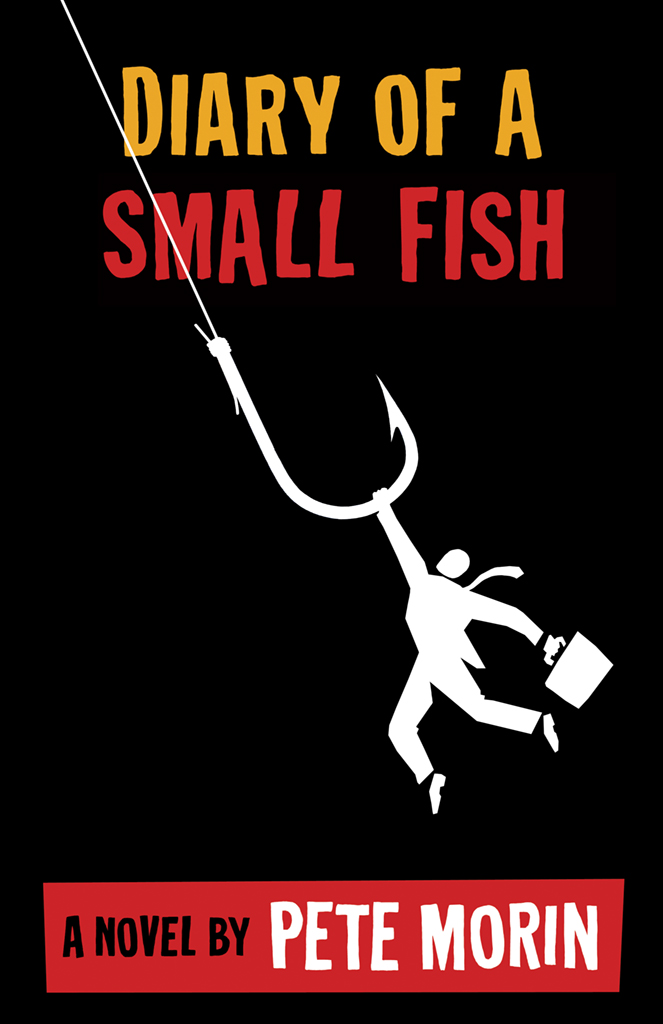
Recommendation: Diary of a Small Fish, by Pete Morin
Today I'd like to introduce you to Pete Morin and his debut novel, Diary of a Small Fish. I know Pete from AQC and Authonomy, where I was privileged to read snippets of DOSF some time ago.
Diary of a Small Fish was released today in ebook format, and will be forthcoming in paperback. If you click the book cover above, it will take you to the Smashwords purchase page where you can read a sample and buy the book in any format you desire. And you should buy the book!
Full disclosure: I have not read the entire book yet, but I hope, dear readers, you know by know that I don't promote authors or books I don't believe in. If you like crime fiction with suspense and a bit of that lovey-dovey mumbo jumbo (my favorite kind of mumbo jumbo!) then Pete won't disappoint. He has a straightforward, shoot-from-the hip kind of style, with just the right amount of quirk. I wholeheartedly recommend you check out this book, and keep your eyes open for more from Pete in the future. In addition to DOSF, you can find some of his short fiction on Smashwords as well. Tell Pete I sent ya!
I will post a proper review of DOSF in a few weeks' time (after I review a few other books that I just haven't had the time to finish reading yet). If you read DOSF, I hope you'll come back here and let me know what you think, but most importantly - review it on Smashwords, Amazon, Goodreads, your blog, etc. and spread the word.
About the author:
When Paul Forte is indicted by a federal grand jury, everyone suspects prosecutor Bernard (don’t call him “Bernie”) Kilroy has more on his mind than justice. Then the FBI agent in charge of Paul’s case gives him a clue to the mystery: Kilroy is bent on settling an old family score, and he’s not above breaking the law to do it.Paul is already dealing with the death of his parents and divorce from a woman he still loves. Now, with the support of an alluring grand juror, Paul must expose the vindictive prosecutor’s own corruption before the jury renders a verdict on his Osso Buco.
Diary of a Small Fish was released today in ebook format, and will be forthcoming in paperback. If you click the book cover above, it will take you to the Smashwords purchase page where you can read a sample and buy the book in any format you desire. And you should buy the book!
Full disclosure: I have not read the entire book yet, but I hope, dear readers, you know by know that I don't promote authors or books I don't believe in. If you like crime fiction with suspense and a bit of that lovey-dovey mumbo jumbo (my favorite kind of mumbo jumbo!) then Pete won't disappoint. He has a straightforward, shoot-from-the hip kind of style, with just the right amount of quirk. I wholeheartedly recommend you check out this book, and keep your eyes open for more from Pete in the future. In addition to DOSF, you can find some of his short fiction on Smashwords as well. Tell Pete I sent ya!
I will post a proper review of DOSF in a few weeks' time (after I review a few other books that I just haven't had the time to finish reading yet). If you read DOSF, I hope you'll come back here and let me know what you think, but most importantly - review it on Smashwords, Amazon, Goodreads, your blog, etc. and spread the word.
About the author:
Pete Morin has been a trial attorney, a politician, a bureaucrat, a lobbyist, and a witness (voluntary and subpoenaed) to countless outrages. He combines them all in this debut novel.Pete’s short fiction has appeared in NEEDLE, A Magazine of Noir, Words With Jam, 100 Stories for Haiti, and Words to Music. He published many of them in a collection titled Uneasy Living, available on Amazon and Smashwords.When he is not writing crime fiction or legal mumbo jumbo, Pete plays blues guitar in Boston bars, enjoys the beach, food and wine with his wife, Elizabeth, and their two adult children, and on rare occasion, punches a fade wedge to a tight pin surrounded by sand or water. He lives in a money pit on the seacoast south of Boston, in an area once known as the Irish Riviera.Pete is represented by Christine Witthohn of Book Cents Literary Agency.
29 March 2011
Smashwords vs. Kindle Direct Publishing
Here's the scoop: I've decided to self-publish my first manuscript in ebook format. I've been sitting on it a while, and I don't know that it's the type of story that will get me an agent or a traditional publishing deal. It's not poorly written, or uninteresting. Quite the opposite - I'm still as in love with it as I ever was. But if I'm honest about the difficulties of the traditional market right now, I can see that it may never see success in that arena, while my current projects have a much better chance. So, after thinking about it long and hard, and watching our friend Andrew Bowen take the brave plunge with his novella Triune (review coming soon!) in both Kindle and print versions, I figured what the heck, why not. Might as well put it out there myself, make a bit of money (heck, even if I only sell a few, that's still more than nothing!) and start making a name for myself.
Over on Agent Query, the AQCrew has two fantastic guides on how to convert your MS Word manuscript into a Kindle ebook, and how to publish your ebook on Amazon's Kindle store. Reading through these, I thought "Hey, easy peasy, I can do that!" and that's where my initial inspiration came from. Of course, I still wanted to do plenty of research. In doing so, our other good friend Terry Gould (author of How Can You Mend This Purple Heart) reminded me that he'd e-published with Smashwords (how could I forget?!) So I started looking at the Smashwords site and the Amazon site and comparing features. Then it dawned on me: I bet my readers would appreciate a nice handy comparison between the two!
There are a whole lot of things to take into consideration - more than I expected. So I made this handy little chart for you to compare e-publishing through Amazon's Kindle Direct Publishing and Smashwords. I'm not sure yet whether I want to pursue a print version of my book, but if I do, I'll probably do a similar chart for the print options.
What I will probably end up doing is using Amazon's KDP to publish the Kindle version, and Smashwords for other formats. This should ensure maximum royalties on the Kindle version, but maximum exposure with the multiple formats and distribution possibilities of Smashwords.
Have any of you already traveled this path of digital self-publishing, or do you have any opinions/input on either Amazon or Smashwords?
Over on Agent Query, the AQCrew has two fantastic guides on how to convert your MS Word manuscript into a Kindle ebook, and how to publish your ebook on Amazon's Kindle store. Reading through these, I thought "Hey, easy peasy, I can do that!" and that's where my initial inspiration came from. Of course, I still wanted to do plenty of research. In doing so, our other good friend Terry Gould (author of How Can You Mend This Purple Heart) reminded me that he'd e-published with Smashwords (how could I forget?!) So I started looking at the Smashwords site and the Amazon site and comparing features. Then it dawned on me: I bet my readers would appreciate a nice handy comparison between the two!
There are a whole lot of things to take into consideration - more than I expected. So I made this handy little chart for you to compare e-publishing through Amazon's Kindle Direct Publishing and Smashwords. I'm not sure yet whether I want to pursue a print version of my book, but if I do, I'll probably do a similar chart for the print options.
| | Smashwords | Amazon |
| Available publishing formats | Kindle, Sony eReaders, Nook, Kobo, iPad, PDF, RTF, Palm Doc, Plain Text | Kindle |
| Costs for author? | Free | Free |
| Royalty % | 85% of net, 70.5% of affiliate sales, 60% of list price from major ebook retailers | 35% of list price OR the 70% option, available only on sales to customers from the US, Canada, and the UK |
| Transaction or other fees | Transaction fee of approx. $.33 per shopping cart (so if customer buys your book and another author's book, the fee is split between the two books) plus a % fee (not specified) based on total sale price; VAT for sales in the UK | $.15 per megabyte of your ebook file; for sales to the UK, there is a 15% statutory Luxemborg VAT |
| Distribution Venues | Smashwords site; Barnes&Noble, Borders, Apple iPad iBookstore, Sony, Kobo, Diesel eBook store all available upon acceptance into premium catalog; Atom/OPDS catalog which reaches major mobile platforms; Amazon coming soon | Kindle store (on device, PC, and mobile), Amazon.com and Amazon.co.uk |
| DRM? (Digital Rights Management) | No DRM | You can choose to include/exclude |
| ISBN? | Required for certain distribution venues, but not for standard catlog. Free ISBN can be assigned (lists Smashwords as publisher, you as author) upon acceptance into premium catalog. $9.95 premium ISBN lists you as publisher | Not required. Your work will be given an Amazon Standard Identification Number (ASIN) automatically upon publishing (ASIN is 10 digits, standard ISBNs are 13 digits) |
| Print option available? | Yes, through affiliate Wordclay | Yes, through Createspace |
What I will probably end up doing is using Amazon's KDP to publish the Kindle version, and Smashwords for other formats. This should ensure maximum royalties on the Kindle version, but maximum exposure with the multiple formats and distribution possibilities of Smashwords.
Have any of you already traveled this path of digital self-publishing, or do you have any opinions/input on either Amazon or Smashwords?
Subscribe to:
Comments (Atom)